Conflicts of Interest in Bidding: A Disclosure Workflow for Your Team
Create a relationship register, check the issuer's declarations and seek written clarification without concealing relevant connections.
At a glance
Review relevant relationships against the issuer's actual declaration requirements, disclose accurately through the prescribed channel and keep conflicts management separate from assumptions about automatic eligibility.
This is independent guidance from TenderSearch SA, not advice from a government authority. Verify current requirements with the issuer and these official references: National Treasury eTenders: official notices · Department of Justice: PAJA judicial review and internal remedies · Information Regulator: POPIA guidance and Information Officer responsibilities.
A signed declaration needs an underlying process
A business cannot reliably declare that it has no relevant conflicts if nobody has asked directors, staff and proposed partners about their relationships. Establish an internal disclosure workflow before the final signing day. The objective is to identify facts the issuer requires and manage integrity risks, not to collect every private detail about employees.
Read the actual declaration in the bid pack, including definitions and the people it covers. Issuers can ask about interests, relationships, employment, ownership or involvement in preparing requirements. Do not replace those questions with a generic 'no conflict' statement or assume that an earlier declaration automatically remains accurate.
Map the people and relationships that matter
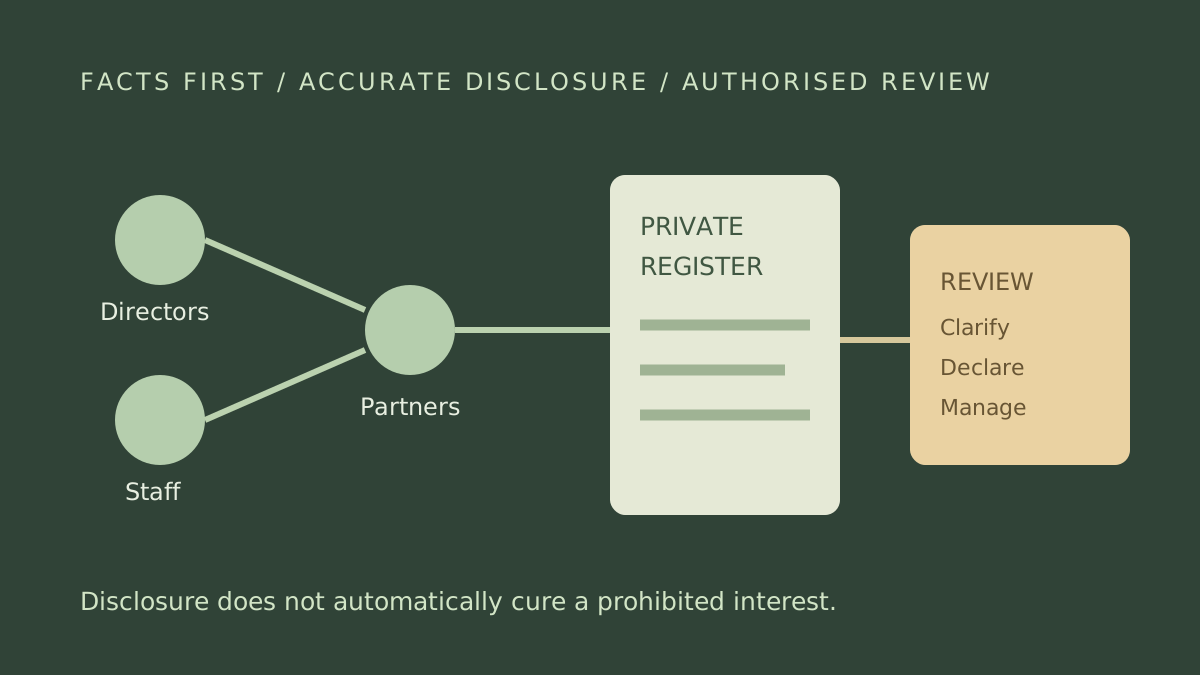
Identify the bidding entity, directors, relevant owners, bid preparers, proposed key staff and partners covered by the form. Ask each person a clear, proportionate set of questions tied to the issuer's wording. Include a way to report uncertain relationships privately to a designated manager rather than through a group email.
Potential issues can include a relevant relationship with someone involved in the procurement, access to non-public information or a prior role in developing the specification. These facts do not all have identical legal consequences. A disclosure is a statement of fact, while eligibility and management decisions depend on the applicable requirements.
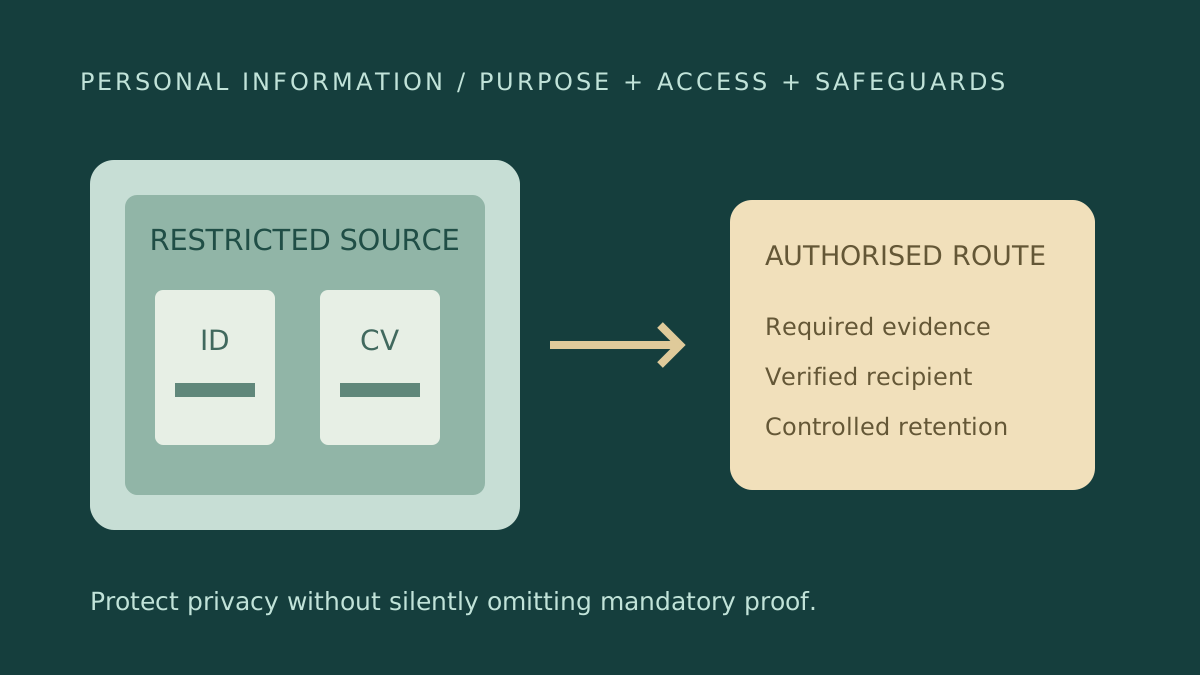
Create a register containing person or entity, nature of connection, procurement affected, date learned, source of information, declaration requirement, action owner and resolution. Restrict access because the register itself can contain sensitive personal information. Do not use it as a general personnel gossip file.
Escalate before making promises
Where a connection may fall within a declaration, have the authorised compliance lead assess the wording and seek professional advice if necessary. If issuer clarification is needed, use the official channel and provide enough factual detail to obtain a meaningful answer. Keep the enquiry neutral and avoid sharing unnecessary personal information more widely.
Illustrative example: a proposed project manager previously helped an institution with early scope research. The business records the actual involvement, checks the current declaration and asks the designated procurement office how it should be disclosed. It does not quietly remove the person's name from an appendix while still relying on that person's undisclosed contribution.
Keep disclosure and management distinct
Accurate disclosure does not necessarily resolve a prohibited interest or remove an unfair advantage. Possible management steps depend on the facts and applicable rules: changing internal access, replacing a bid-team member, seeking a formal issuer determination or deciding not to bid. Do not promise a universal cure such as recusal without checking whether it is sufficient.
Similarly, do not assume a family connection automatically disqualifies every supplier. The relevant relationship, role, decision-making involvement and governing requirements matter. Ask for a documented determination where appropriate rather than relying on a private assurance from the connected person.
Create a safe route for late disclosures
Allow staff to correct or add information when they realise a connection may be relevant. Record when the business learned the fact and who assessed it. Do not discourage reporting by treating every uncertain relationship as misconduct. At the same time, do not overwrite a signed declaration silently: determine whether the issuer must be informed and preserve the original and corrected records with the reason for the change.
Verify the final declaration and monitor changes
Before submission, reconcile the register with the prescribed forms and supporting ownership or entity information. Have the authorised signatory review uncertain items rather than delegating a blank signature. Retain the factual responses, advice and issuer clarification that support the declaration. A signature cannot make an inaccurate statement safe.
After submission and during performance, provide a route for reporting changes and check any continuing disclosure obligations in the contract. Relationships, staff roles and ownership can change. Preserve a dated history of amendments and actions instead of overwriting the original declaration. For suspected misconduct, use the appropriate official reporting process and seek advice; do not confront individuals or publish allegations without evidence.
The Justice Department's PAJA review guidance discusses bias and apparent bias in administrative decision-making. It helps explain why conflicts matter, but it is not a complete supplier eligibility code. Your tender's actual declarations, applicable prescripts and specialist advice govern the response in a particular case.
- Read the exact declaration and definitions.
- Ask covered people proportionate questions.
- Record uncertain connections privately.
- Seek authorised clarification and advice.
- Reconcile final forms and monitor changes.
Frequently asked questions
Does disclosure automatically make a conflict acceptable?
No. Disclosure and lawful management are separate questions. The issuer's requirements and applicable law determine whether a supplier may continue.
Must every family connection mean disqualification?
Do not assume a universal rule. Identify the actual relationship, procurement role and declaration wording, then seek a formal clarification or advice.
Found this useful? Share it with another business — it costs you nothing and helps us reach more South African bidders.
Put your bid preparation into practice
Browse public tender previews, check the official requirements, then shortlist opportunities that fit your business. Starter is R149/month for search and saves. Professional at R299/month adds daily keyword email alerts, unlimited saves and closing-date reminders.
Compare tender subscription plans