Bid Validity Extensions: What to Check Before You Agree
Track the original validity period, verify an extension request and review capacity, security and commercial exposure before responding.
At a glance
Verify the issuer's extension request, calculate dates from the actual bid conditions, obtain authorised internal approval and respond in the prescribed form without assuming that new terms are permitted.
This is independent guidance from TenderSearch SA, not advice from a government authority. Verify current requirements with the issuer and these official references: National Treasury eTenders: official notices · HDA/HO/2026/007: published validity and extension conditions (issuer-specific example) · National Treasury: General Conditions of Contract (July 2010).
Validity is a commitment window
A bid-validity period describes how long an offer remains available under the bid conditions. It is different from the contract duration, delivery period and warranty. When evaluation takes longer, an issuer may ask bidders to extend validity. Do not treat that request as a routine administrative email: it can extend the time during which your business remains exposed to its offered terms.
Begin with the actual bid conditions and your submitted offer. Record the stated period, how it runs and any fixed expiry date. If the wording is ambiguous, seek clarification rather than relying on a generic online calculator. This guide is a commercial-control workflow, not a legal determination that a particular extension is valid.
Authenticate and log the request
Confirm the request comes from the authorised issuer channel and relates to the correct tender and bidding entity. Check when it was issued, the response deadline, proposed new expiry and whether a prescribed declaration must be signed. Compare it with any public extension notice or direct correspondence you previously received.
Create a validity register with original closing date, original validity terms, calculated expiry and calculation basis, request received date, response due date, proposed extension, internal approver and proof of delivery. Keep original requests rather than only transcribing their dates. Where multiple extensions occur, preserve the sequence so no one mistakes the first extension for the current position.
If the request arrives after the period you believe has expired, or contains conflicting dates, raise it promptly with the issuer and obtain legal advice about the consequences. Do not assume a supplier can repair an expired offer simply by signing a new date, or that every late request is necessarily unlawful.
Review the commitments that will remain open
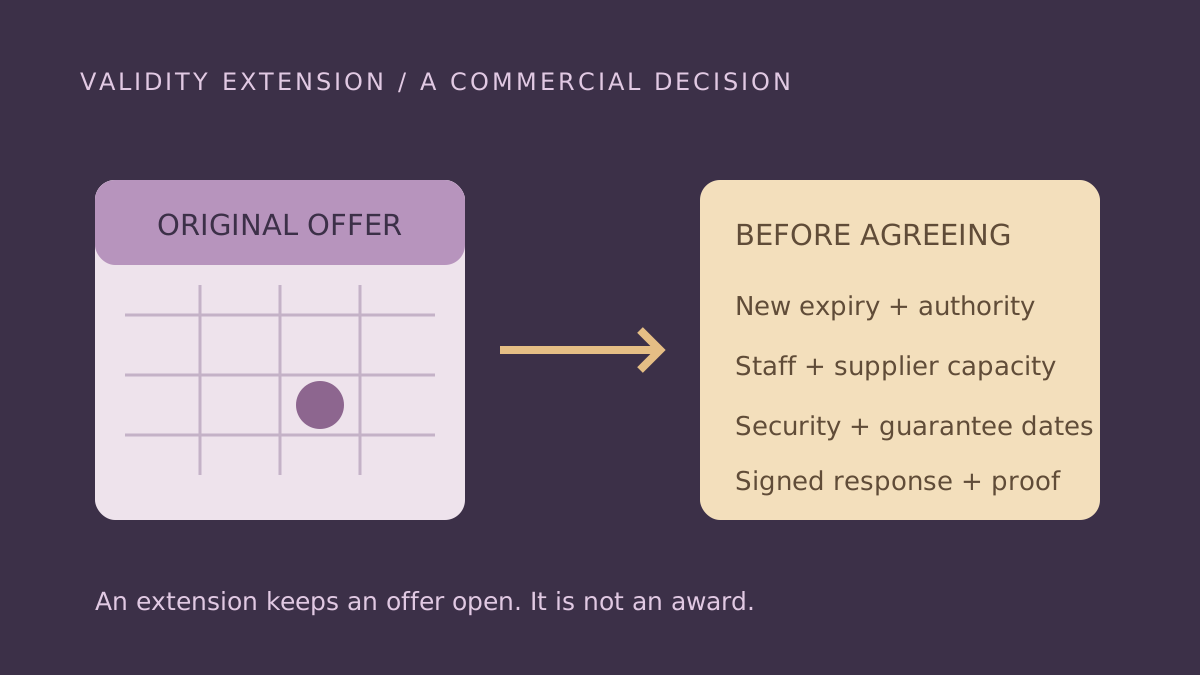
Ask your operations team whether staff, vehicles, equipment and subcontractor capacity are still available. Ask suppliers whether their quotes remain valid and whether lead times have changed. Confirm the currency, imported-input and financing exposure where relevant. The point is to understand the cost of continuing your offer, not to re-price it without permission.
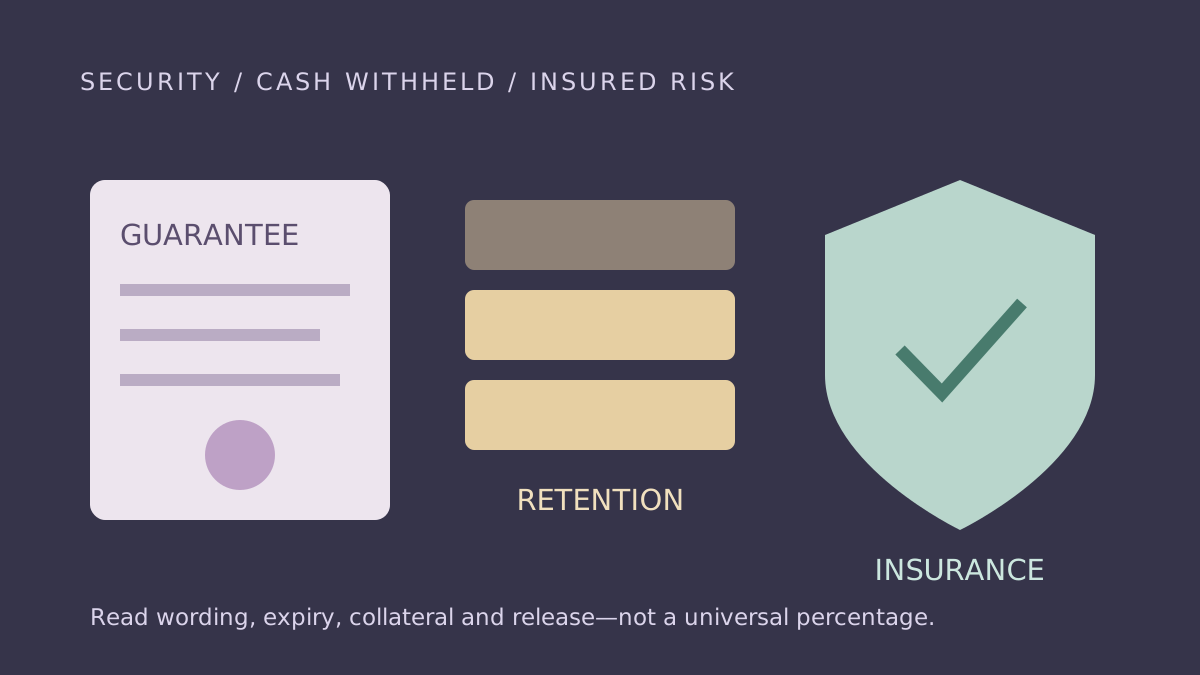
Check associated bid security, guarantees, insurance quotations and third-party undertakings. An extension of the offer may not automatically extend a bank instrument or partner commitment. Discuss wording, dates and fees with the relevant provider before responding. Do not represent that a guarantee has been extended until the provider actually confirms it.
Respond through an authorised decision
Prepare a short internal recommendation: accept, decline or seek clarification, with reasons and named approval. Use the company's authorised signatory and retain the authority record. If you agree, follow the issuer's requested wording and channel. Adding a new price or condition may turn the response into something different from an unqualified extension and can affect acceptability.
Illustrative example: a supplier is asked to extend an offer by a stated period, but its equipment hire quote expires sooner. It checks whether the hire company will hold the quote and whether the resulting cost is manageable. It then makes an authorised decision and sends the prescribed response. It does not assume that signing an extension allows it to renegotiate the tender price later.
Check for overlapping open commitments
Maintain a business-wide list of bids that remain valid. Two delayed evaluations can leave the same team promised to different buyers for overlapping periods. Ask operations to model what happens if both are awarded, including mobilisation lead times and any permitted substitutions. Record the outcome of that check before extending again. A tender-by-tender sales view can miss a capacity conflict that becomes visible only across all open offers.
Keep the outcome visible
Save the signed response, dispatch evidence and any acknowledgement. Update resource planning so the business knows which offers remain open, without treating them as awarded work. If you decline or do not respond, assess the consequences under the actual bid conditions; avoid universal claims that declining is always penalty-free or always disqualifying.
An extension is not an award, proof that you are the preferred bidder or an assurance that the process will finish by the new date. Continue to monitor formal notices, avoid making speculative purchases and obtain advice where dates, authority or securities are disputed. Keep the technical record separate from sales forecasts so an extended validity window is not mistakenly counted as contracted revenue.
- Verify tender and authorised request.
- Check date calculation and response deadline.
- Reconfirm resources and supplier commitments.
- Review security and guarantee expiry.
- Retain authorised response and delivery evidence.
Frequently asked questions
Can I increase my price when agreeing to an extension?
Do not assume so. Read the request and bid conditions. A qualified response can have consequences; seek clarification and advice before changing an offered term.
Does an extension mean I am about to win?
No. It may simply reflect an unfinished evaluation. Continue to distinguish a valid offer from a formal award and executed contract.
Found this useful? Share it with another business — it costs you nothing and helps us reach more South African bidders.
Put your bid preparation into practice
Browse public tender previews, check the official requirements, then shortlist opportunities that fit your business. Starter is R149/month for search and saves. Professional at R299/month adds daily keyword email alerts, unlimited saves and closing-date reminders.
Compare tender subscription plans