After an Unsuccessful Bid: Request Useful Reasons and Learn from the Result
Request a clear explanation of your own tender result and turn verified feedback into an evidence-based improvement plan.
At a glance
Request the decision and reasons through the issuer's stated channel, ask specific questions about your own evaluation, and preserve dates because a debrief does not automatically pause a challenge deadline.
This is independent guidance from TenderSearch SA, not advice from a government authority. Verify current requirements with the issuer and these official references: Department of Justice: PAJA written reasons · Department of Justice: PAJA judicial review and internal remedies · National Treasury eTenders: official notices.
Separate learning from challenging
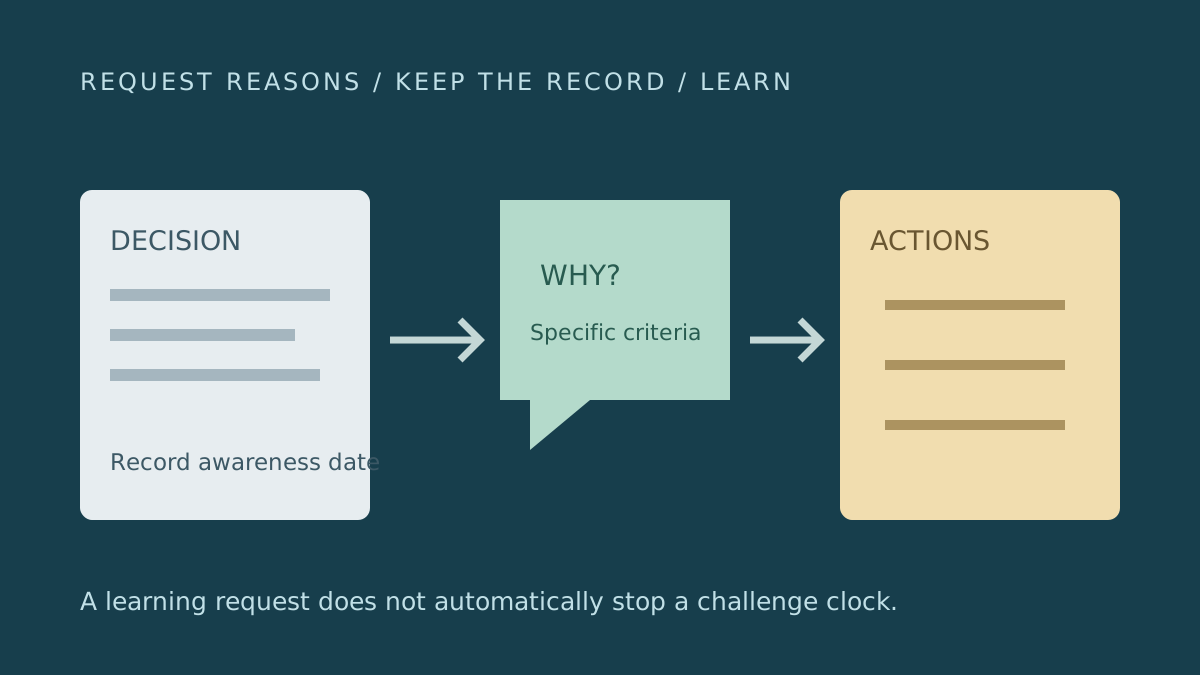
An unsuccessful result can reveal an eligibility failure, weak technical evidence, an uncompetitive offer or a misunderstanding of the requirements. The first useful step is to establish what decision was made and why. A debrief is a learning and information exercise; it is not automatically an objection, appeal or judicial-review application.
If you suspect an unlawful decision or need urgent relief, obtain legal advice promptly rather than waiting for a friendly meeting. A request for feedback does not itself suspend another time limit. The separate guide on objection and review routes explains how to assemble the facts an adviser needs.
Build a result file before asking questions
Preserve your submitted bid, final file inventory, receipts, published criteria, addenda and all result correspondence. Record the date you first received or became aware of the decision and how you learned of it. Distinguish an intended-award notice from a final decision where the issuer uses different stages.
List what the published result actually tells you and what remains unknown. An award amount or winning name does not disclose your own technical score or establish why your bid failed. Do not infer non-responsiveness from silence or assume the winning supplier received every possible preference point.
Check the issuer's published debrief or information-request process and send your request to the designated office. Keep proof of dispatch and acknowledgement. A telephone conversation can help identify the right channel, but follow important factual requests with a written record.
Use a neutral request outline
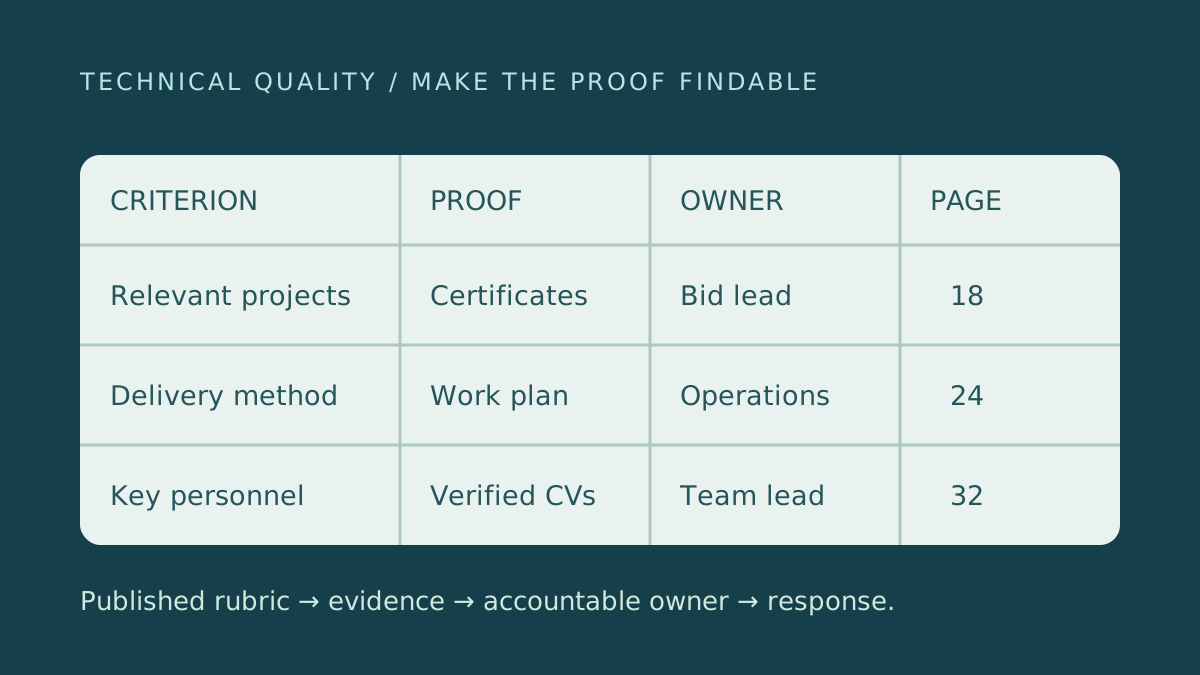
A concise request can identify your company, tender reference, submission date and decision notice, then ask for the reasons relating to your own result. Ask which evaluation stage you reached, any finding of non-responsiveness, your criterion-level scores where disclosable, and the explanation for material scoring deductions. Refer to the specific criterion and page in your bid rather than asking only why you did not win.
Illustrative wording: 'Please confirm the decision concerning our bid for [reference], its date and the reasons for our result. In particular, please clarify the finding under criterion [number] and the evidence considered. Please advise the applicable process if a separate formal request is required.' Replace the brackets with real facts; this is an outline, not a guarantee that a particular legal request is complete.
Understand the limits of access
The Justice Department's PAJA reasons guidance explains the right to request written reasons for administrative action adversely affecting rights and describes a 90-day request period, with a further period for the administrator to respond. Applicability, when time starts and available extensions require consideration of the actual facts and law. Do not use that summary as permission to postpone urgent advice.
A reasons request does not automatically entitle you to every rival's confidential technical proposal, personal information or commercially sensitive costing. Access to documents and reasons for a decision can involve different processes. Ask for a properly explained decision and seek advice on any additional access request rather than circulating accusations or demanding unrestricted competitor files.
Record feedback accurately
After a meeting or call, prepare a dated note identifying attendees, questions asked, answers received and outstanding documents. Distinguish the issuer's explanation from your own interpretation. Send a factual confirmation where appropriate and invite correction of misunderstandings. Store the note with the original result record. This prevents an informal comment about one criterion from later becoming an unsupported claim about the entire evaluation or another bidder's submission.
Turn feedback into a controlled improvement
Create a lessons worksheet with finding, supporting source, root cause, corrective action, owner and completion evidence. Separate verified feedback from your team's hypotheses. If a client reference was uncontactable, the action might be to maintain current reference permissions and alternative authorised contacts—not to inflate the project description.
Run a commercial review as well. If the bid was responsive but price was uncompetitive, compare scope assumptions and your cost structure without copying a headline award value. Keep changes proportionate: one result does not prove that an entire sector is unwinnable. Preserve the original record unchanged, track improvements in future submissions and keep legal concerns on a separate, adviser-led timeline.
- Save decision and awareness dates.
- Ask specific questions about your own result.
- Keep requests factual and respectful.
- Do not assume rival documents are unrestricted.
- Assign evidence-backed improvement actions.
Frequently asked questions
Will requesting a debrief stop a review deadline?
Do not assume it will. Different remedies have different rules. Obtain prompt legal advice if you may challenge the decision.
Can I demand the winner's entire bid?
Not automatically. Confidentiality, privacy and access-to-information rules may apply. A request for reasons is not the same as unrestricted access to every competitor document.
Found this useful? Share it with another business — it costs you nothing and helps us reach more South African bidders.
Put your bid preparation into practice
Browse public tender previews, check the official requirements, then shortlist opportunities that fit your business. Starter is R149/month for search and saves. Professional at R299/month adds daily keyword email alerts, unlimited saves and closing-date reminders.
Compare tender subscription plans