Client References and Completion Certificates: Build Verifiable Project Evidence
Create an honest project-evidence ledger, obtain reference permissions and distinguish your company's work from individual or partner experience.
At a glance
Maintain an evidence ledger for each genuine project, showing your legal entity's role, delivery dates, scope, completion proof and a reference contact authorised to confirm the work.
This is independent guidance from TenderSearch SA, not advice from a government authority. Verify current requirements with the issuer and these official references: National Treasury eTenders: official notices · Published issuer example: reference letters and completion-certificate rubric (not universal requirements) · Information Regulator: POPIA guidance and Information Officer responsibilities.
Treat a reference as evidence, not a testimonial
Tender evaluators may ask for proof of comparable work in a specific format. A flattering quote on a website may not establish contract value, delivery period, role or successful completion. Start with the evidence requirement in the actual bid: it may ask for signed reference letters, completion certificates, appointment records, contactable clients or a combination.
Never invent a project, backdate a certificate or ask a friendly contact to confirm work they did not supervise. If your evidence is incomplete, record the gap and seek a legitimate replacement or clarification. Honest limits are safer than a confident statement that falls apart during verification.
Build a project evidence ledger
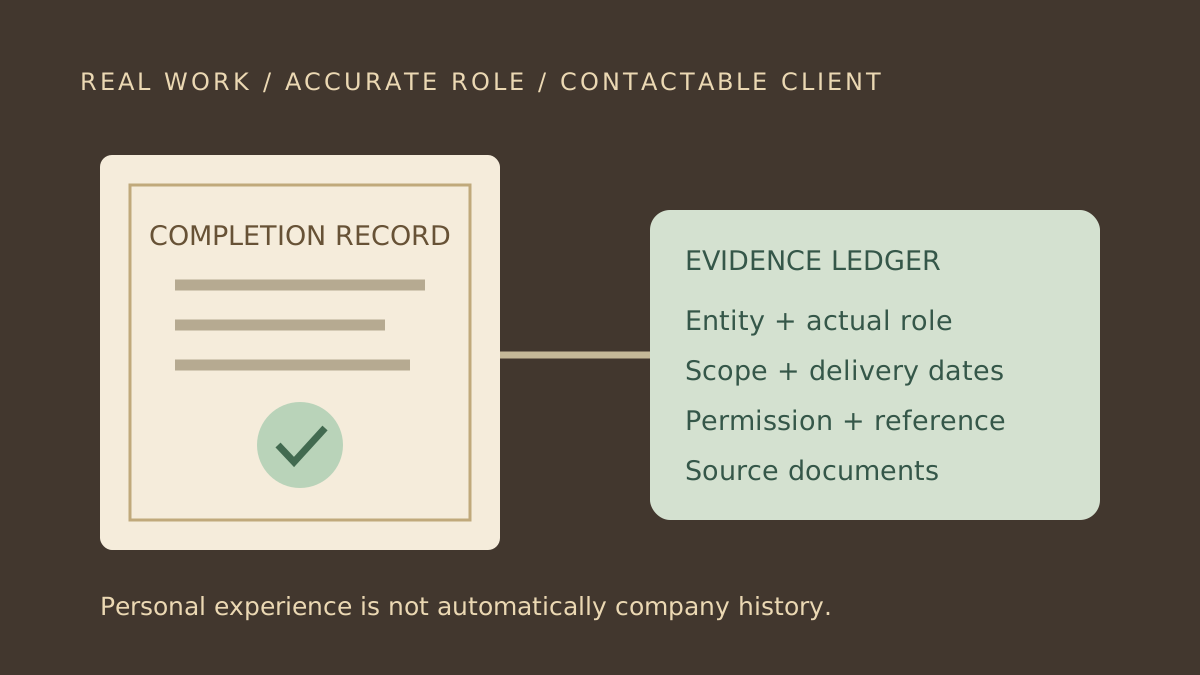
Use one row per project with client legal name, contract reference, your contracting entity, role, scope, location, start and completion dates, relevant value basis, supporting documents and permission status. Separate main-contractor work from subcontract work and joint-venture participation. Preserve the actual role rather than claiming the full project's scope or value as your own.
For every document, store its source, date and custodian. Keep the original client-issued file where available. If a completion certificate covers only one phase, label that phase. If the project is ongoing, do not describe it as complete merely because a milestone was accepted.
Add a comparability note tied to the current tender. Explain the relevant service, scale, complexity or environment rather than assuming a large client name earns credit. A smaller but genuinely similar completed project can be more useful evidence than an unrelated high-value assignment.
Ask clients for precise confirmation
Send the client a factual draft or request containing the work reference, dates, scope and your role, and ask the appropriate person to verify and issue it through their authorised process. Do not write an exaggerated endorsement and ask someone to rubber-stamp it. Give enough lead time for clients whose policy requires approvals before staff provide references.
Confirm that the named person is willing and able to answer verification enquiries. Record their current role and preferred business contact channel. Where the original manager has left, ask the client's procurement or records team who can confirm the contract. Do not substitute a personal mobile number from an old address book without checking permission and relevance.
Separate company history from people's experience
An employee's experience at a previous employer can support a personnel criterion if the tender permits it. It does not automatically become the bidding company's corporate track record. Similarly, a shareholder's former company, a subcontractor's project and a partner's certificate should not be presented as work performed by your legal entity.
Illustrative example: a newly formed engineering company employs a technician who helped deliver a municipal project elsewhere. The CV accurately describes that individual's role, while the corporate-project schedule states that the new company has not completed that project. If the tender requires corporate references, the team evaluates the gap honestly instead of relabelling the technician's experience.
Prepare for an actual reference call
Give the authorised contact the correct project reference and remind them which factual records support the work. Ask whether they can confirm dates, scope and your role from their records, without suggesting the answers they should give. Keep a fallback route through the client's records office if staff move. Do not coach a contact to inflate satisfaction or conceal a dispute; any unresolved performance issue should be handled truthfully.
Control privacy and final verification
Reference letters and completion records can contain signatures, personal contacts, contract prices and confidential client information. Share only through the authorised submission route and restrict your internal repository to staff who need it. POPIA compliance requires a lawful, proportionate processing approach; consent is not the only possible basis, and a general permission should not be treated as unlimited publication authority.
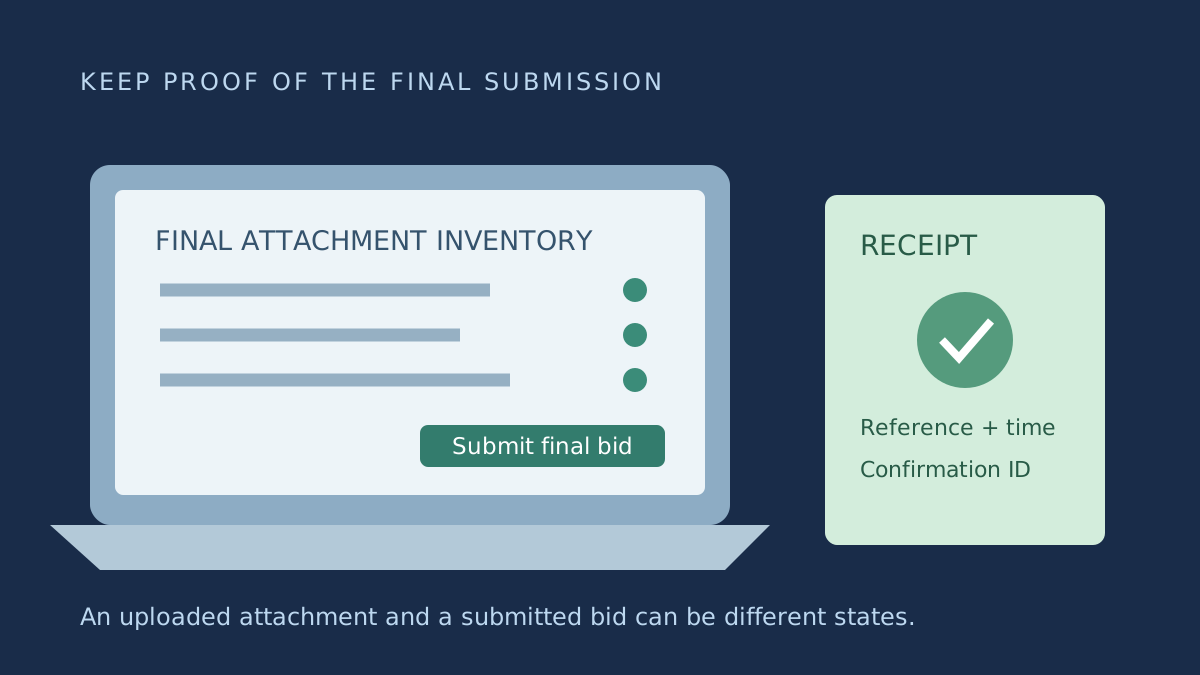
Before each bid, confirm the evidence still meets the stated period and format. Check that contacts remain reachable, names match the bidding entity and page references point to legible documents. Keep a record of exactly what was submitted. If an evaluator requests verification, coordinate factual responses without coaching a client to make claims beyond the actual work.
- Record your legal entity and actual role.
- Distinguish complete, phased and ongoing work.
- Obtain current reference permissions.
- Use the tender's prescribed proof format.
- Never manufacture experience to fill a scoring gap.
Frequently asked questions
Can a purchase order prove successful completion?
It can help establish appointment or scope, but does not by itself prove completion. Supply the completion evidence the specific tender requests.
Can I use a former employer's project?
Describe individual experience accurately where permitted. Do not claim another entity's contract as your company's corporate experience.
Found this useful? Share it with another business — it costs you nothing and helps us reach more South African bidders.
Put your bid preparation into practice
Browse public tender previews, check the official requirements, then shortlist opportunities that fit your business. Starter is R149/month for search and saves. Professional at R299/month adds daily keyword email alerts, unlimited saves and closing-date reminders.
Compare tender subscription plans