Delivery Is Not Yet Acceptance: Inspection, Rejections and Handover
Prepare an evidence trail from authorised dispatch to inspection and acceptance, including a controlled response to damaged or rejected goods.
At a glance
Check the contract's delivery and acceptance rules, document what arrived and who received it, then obtain the required inspection or handover evidence before assuming the obligation is complete.
This is independent guidance from TenderSearch SA, not advice from a government authority. Verify current requirements with the issuer and these official references: National Treasury: General Conditions of Contract (July 2010) · Eskom: procurement scam delivery warnings.
Separate four events
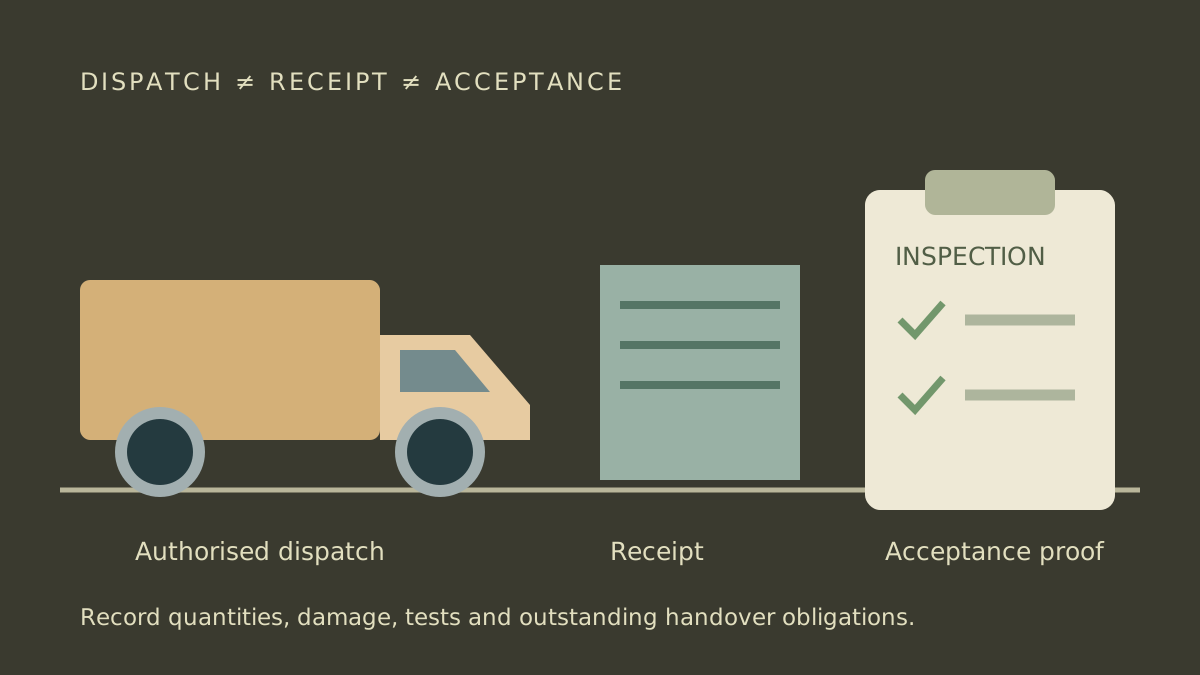
Dispatch means goods left your control. Delivery means they reached the specified destination under the relevant terms. Receipt records what someone took custody of. Acceptance may require inspection, testing or another contractual approval. These events can happen at different times and have different consequences for risk, payment and warranty.
Start with the actual contract, special conditions and delivery schedule. The Treasury General Conditions of Contract provide a useful official reference for subjects such as inspection, delivery and warranty, but only the provisions incorporated into your contract and applicable amendments determine your particular obligations. Do not assume a signature at a gate settles every question.
Prepare before the vehicle leaves
Verify the authorised purchase order, item codes, quantities, specifications, packaging, delivery address, hours and contact person. Confirm booking, access and offloading requirements. Match any serial numbers or batch information to the consignment. If installation, commissioning, training or manuals are required, plan those tasks as separate deliverables rather than treating them as optional extras.
Create a dispatch pack containing the order reference, packing list, delivery note, inspection or test certificates required by the contract and any handling instructions. Give the driver a clear escalation contact for discrepancies, unexpected destination changes or a person requesting off-site handover.
Independently verify unusual delivery changes. Fraudsters can use genuine-looking orders or meet suppliers outside legitimate premises. Do not let pressure to complete the route override the authentication process described in the scam-verification guide.
Record what actually happens on site
Capture arrival date and time, delivery location, items and quantities presented, visible damage, shortages and the receiving person's identity and role. Ask the recipient to record exceptions clearly rather than signing a clean note when goods are disputed. Take proportionate photographs where allowed, without exposing unnecessary personal or security-sensitive information.
Illustrative example: a buyer receives ten units but one package is visibly damaged. The delivery note records ten received, one subject to inspection for damage, with the relevant item identifier. The supplier does not later describe the note as unconditional acceptance of ten conforming units. This is an evidence example, not a universal form of wording required by law.
Manage inspection and rejection through the contract
Check who inspects, what tests apply, where they occur and when the buyer must communicate findings under the contract. Supply the records or assistance you are obliged to provide. Track installation and commissioning results if acceptance depends on them. Silence should not be assumed to mean acceptance unless the governing terms and law support that conclusion.
For a rejection, request the stated non-conformity and relevant evidence. Quarantine affected stock and agree the authorised return, repair or replacement process. Record costs, responsibility, deadlines and any revised acceptance step. Do not remove goods from site, substitute a different product or issue a credit without understanding the contractual and operational consequences.
Keep partial acceptance visible
If only part of a consignment passes inspection, link the accepted quantities and rejected items to their identifiers. Ask how the buyer will record the split and what further evidence is needed for the balance. Keep replacement deliveries linked to the original discrepancy rather than recording them as unrelated new sales. This helps avoid duplicate billing and makes it easier to demonstrate that each outstanding obligation was eventually resolved.
Close handover without losing the evidence
Assemble the required acceptance certificate, test results, manuals, asset or serial-number schedule, training attendance and warranty documents. Link them to the order and invoice. Identify outstanding defects or deliverables rather than assuming payment means every performance obligation ended.
If receipt is confirmed but acceptance is delayed, ask the contract manager what remains outstanding and keep the response. The payment team may need acceptance evidence, but an invoice query and a technical defect are not the same issue. Use the separate invoice-escalation workflow for debt follow-up and obtain advice when risk transfer, rejection rights or liability are disputed.
Finally, review the delivery incident log for preventable causes such as incorrect labels, inadequate packaging or unclear booking instructions. Feed those lessons into the next dispatch checklist. A good handover system records both physical movement and contractual completion, making it easier to resolve genuine discrepancies without exaggerating what a signature proves.
- Match dispatch to authorised order.
- Verify destination and recipient.
- Record quantities and exceptions accurately.
- Track inspection and corrective action.
- Link acceptance and warranty evidence to the invoice.
Frequently asked questions
Does a signed delivery note always prove acceptance?
No. It may prove receipt while inspection, testing or commissioning remains outstanding. Read the contract and the actual wording of the note.
Can I substitute an equivalent product after an order?
Do not assume so. Obtain any approval the contract requires and keep the authorised specification change before dispatching a substitute.
Found this useful? Share it with another business — it costs you nothing and helps us reach more South African bidders.
Put your bid preparation into practice
Browse public tender previews, check the official requirements, then shortlist opportunities that fit your business. Starter is R149/month for search and saves. Professional at R299/month adds daily keyword email alerts, unlimited saves and closing-date reminders.
Compare tender subscription plans