The Contract Evidence File: Records to Keep After a Government Award
Build a linked contract register for authority, changes, performance and handover without assuming one retention period fits every record.
At a glance
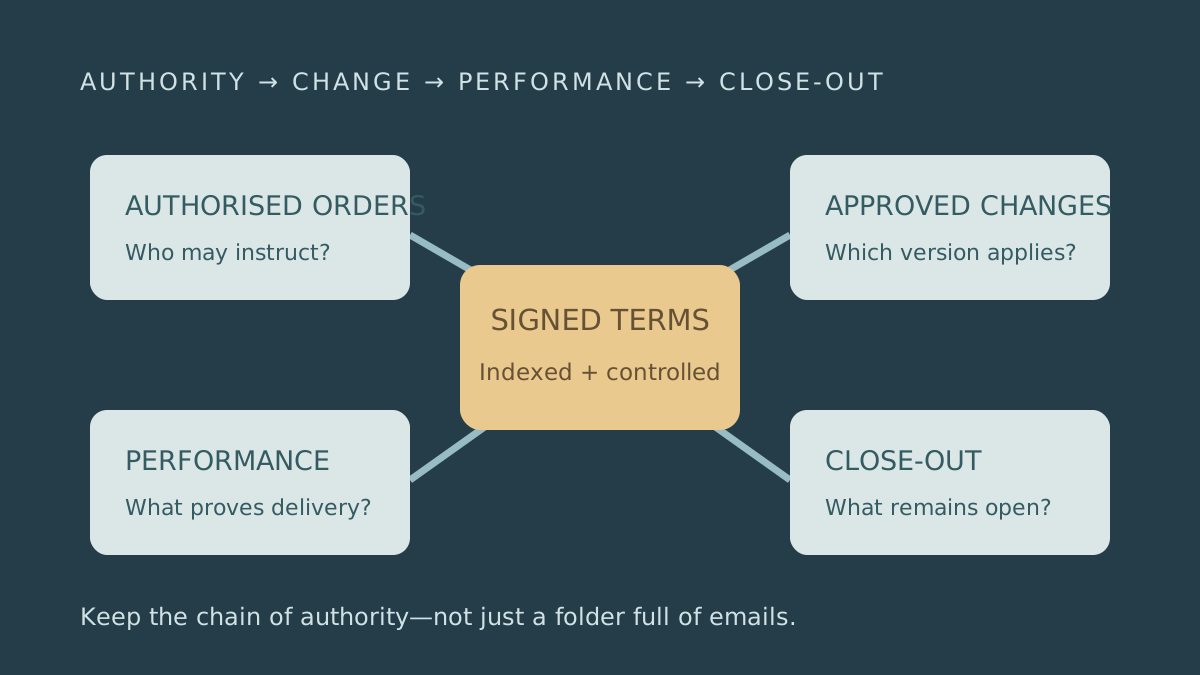
Keep a controlled record linking the signed contract, authorised orders, change approvals, performance evidence and close-out, with owners and retention rules appropriate to the actual contract and law.
This is independent guidance from TenderSearch SA, not advice from a government authority. Verify current requirements with the issuer and these official references: National Treasury: General Conditions of Contract (July 2010) · Information Regulator: POPIA guidance and Information Officer responsibilities.
An award letter is only the beginning of the file
After an award, teams often move straight into delivery while contract documents remain scattered across inboxes. That makes it difficult to prove which scope was authorised, whether a change was approved or which version of a schedule applied. Create a contract evidence file before mobilisation and appoint a custodian who can maintain it throughout delivery.
The goal is not to store every message forever. It is to preserve a reliable chain from authority to performance and close-out. Your actual contract, applicable law, audit obligations and privacy requirements determine what must be retained and for how long; there is no universal period suitable for every record.
Establish the authoritative baseline
Store the final signed agreement, incorporated conditions, accepted schedules, purchase orders, award correspondence and any documents identified as forming the contract. Record document titles, versions, dates, parties and precedence clauses. Do not assume the last email attachment automatically overrides a signed schedule.
Keep evidence of signatory authority and the issuer's designated contract representatives. Map who can instruct work, approve variations, certify performance and authorise payment. A helpful operational contact may not have authority to amend price or scope. Make the authority map accessible to delivery staff so urgent requests are escalated appropriately.
Create a register linking contract reference, work orders, locations, responsible manager, milestones, reporting obligations and related securities or insurance. Use stable identifiers in file names so the file remains understandable when staff change.
Capture change before it becomes a dispute
For each proposed variation, record the request, reason, scope impact, price and time effect, required approval and final authorised instruction. Distinguish a quotation for extra work from approval to perform it. Where the contract requires a formal notice or change order, follow that process rather than relying only on a meeting conversation.
Illustrative example: a site manager asks for an additional delivery point. The supplier records the request, checks the manager's authority and obtains the required written change approval before treating the extra trip as billable. The record links the approved change to the revised schedule and delivery evidence. This demonstrates traceability, not a claim that every oral instruction is legally ineffective.
Link performance records to obligations
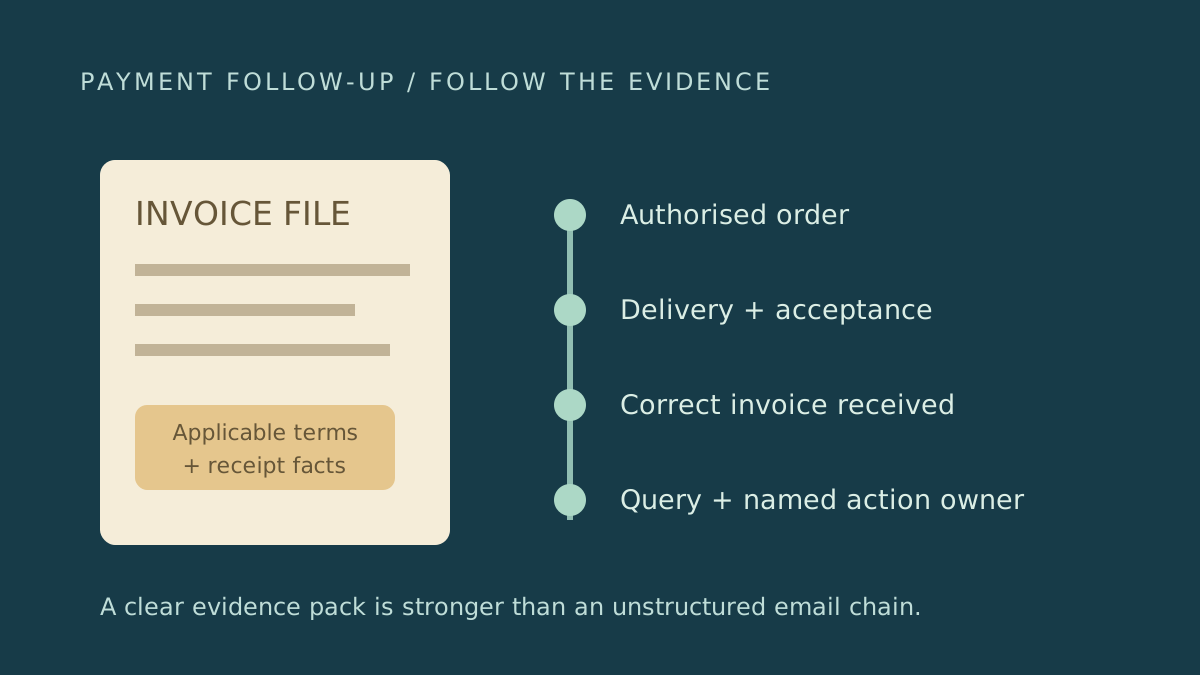
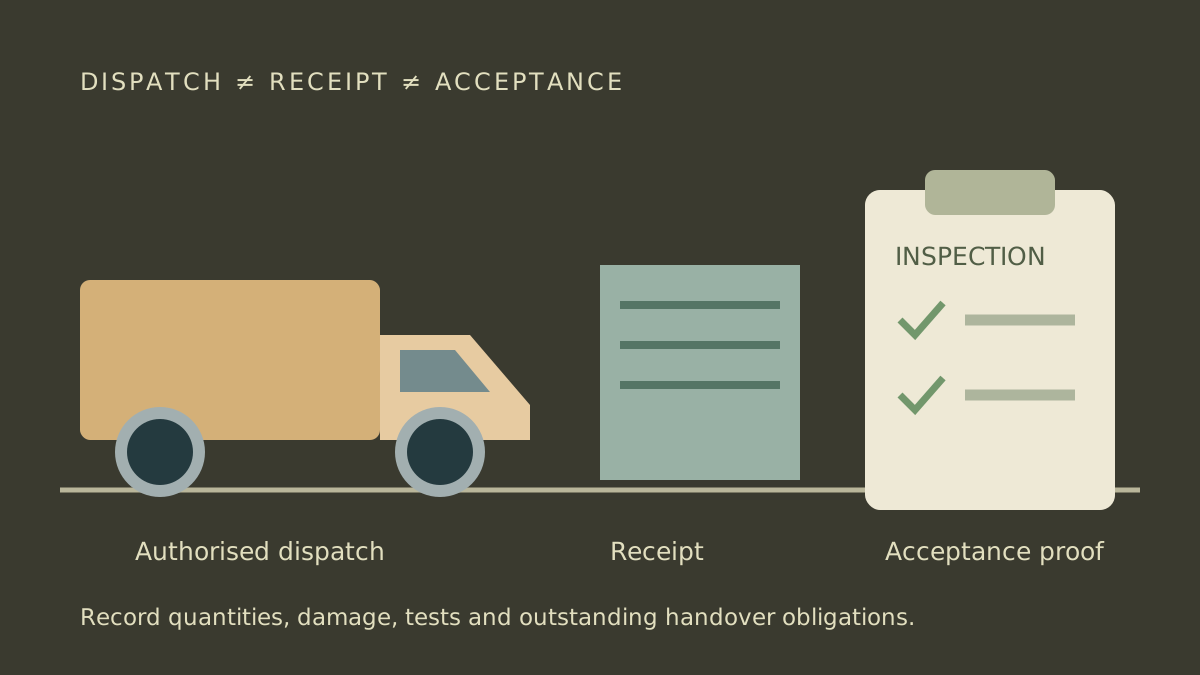
Keep service reports, meeting minutes, inspection records, incident logs, progress certificates and handover documents against the relevant clause or work order. Record exceptions and corrective actions as well as successful performance. An honest record of how a defect was resolved is often more useful than a folder of generic monthly statements saying everything was satisfactory.
Maintain a correspondence log for material instructions, notices and decisions. Confirm disputed minutes promptly through the contract process. Keep original communications with dates and attachments, and avoid editing historic evidence to make a later story look cleaner. Separate internal commentary from documents issued to the client.
Plan a staff handover
When the contract manager changes, review the index with the incoming person. Identify open notices, pending approvals, recurring reports and commitments not yet reflected in a formal change. Transfer access through the controlled system rather than forwarding a personal inbox wholesale. Have the new custodian confirm that the signed baseline and current obligations can be retrieved. This reduces dependence on one person's memory and preserves context without altering the historic record.
Make the file usable and secure
Use a clear index, controlled permissions, version history and reliable backups. Test retrieval: can a colleague locate the signed scope, latest authorised change and evidence for a sampled delivery without asking the original project manager? If not, improve the links and naming rather than adding more unstructured folders.
At close-out, reconcile outstanding changes, guarantees, retention, defects, deliverables and client assets. Obtain the certificates or acknowledgements the contract requires and record unresolved matters explicitly. Apply a retention schedule that accounts for legal holds, audit requirements and personal-information safeguards. A closed operational project may still have continuing contractual obligations.
This guide owns the record architecture, not the legal effect of every notice or the collection of an overdue invoice. Use the related payment and acceptance guides for those workflows, and obtain professional advice when a record gap could affect entitlement, liability or a formal dispute.
- Identify authoritative signed documents.
- Map instruction and approval powers.
- Link each change to formal approval.
- Index performance and exception evidence.
- Plan secure close-out and retention.
Frequently asked questions
Must I keep every tender and contract record forever?
No universal rule applies. Determine the relevant legal, contractual, audit and privacy requirements, and preserve records subject to a dispute or legal hold.
Is an email request enough authority for extra work?
Not necessarily. Check who has authority and which variation procedure the contract requires. Obtain advice where instructions and entitlement are disputed.
Found this useful? Share it with another business — it costs you nothing and helps us reach more South African bidders.
Put your bid preparation into practice
Browse public tender previews, check the official requirements, then shortlist opportunities that fit your business. Starter is R149/month for search and saves. Professional at R299/month adds daily keyword email alerts, unlimited saves and closing-date reminders.
Compare tender subscription plans