Performance Guarantees and Retention: Understand the Exposure Before Signing
Map security amounts, expiry, release conditions and cash-flow risks without assuming one guarantee form or retention percentage fits every contract.
At a glance
Read the actual security and retention clauses, confirm the instrument wording with the provider and model both cash and contingent exposure before accepting the contract.
This is independent guidance from TenderSearch SA, not advice from a government authority. Verify current requirements with the issuer and these official references: National Treasury: General Conditions of Contract (July 2010) · National Treasury eTenders: official notices.
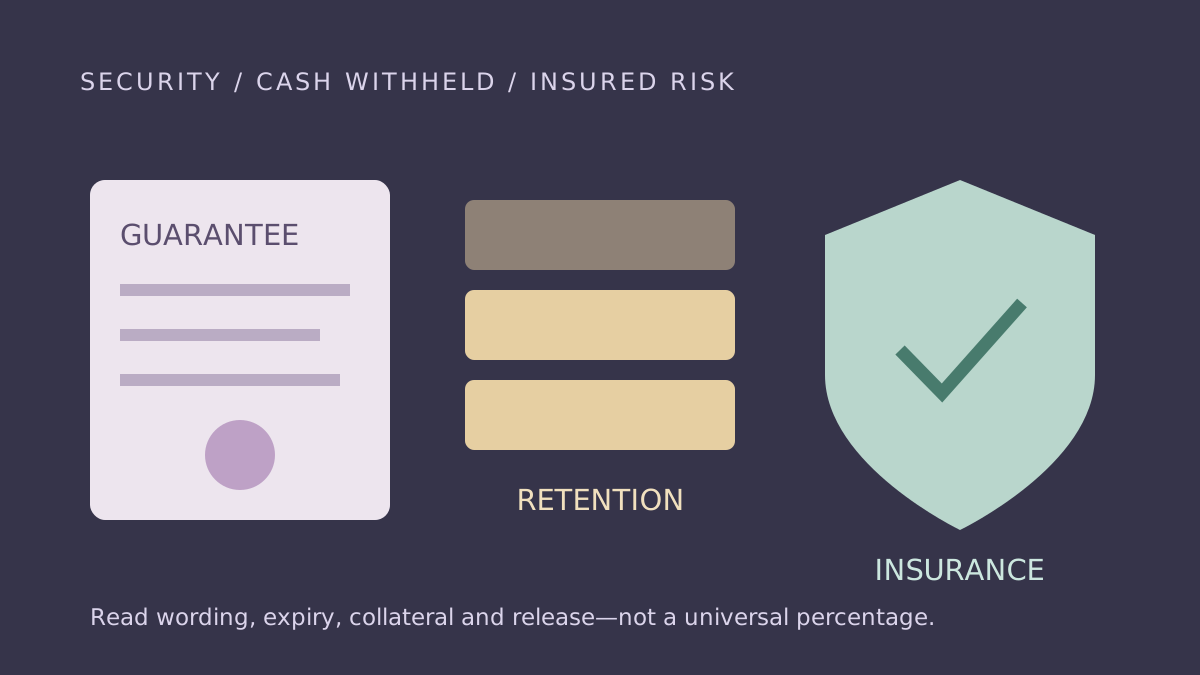
Different protections create different risks
A performance guarantee is an undertaking by a provider under its stated terms. Retention is money withheld from payments under the contract. Insurance responds to covered risks within its policy wording. These mechanisms can coexist, but they are not interchangeable. A policy certificate does not automatically satisfy a requirement for a bank guarantee, and withheld retention does not necessarily limit your liability.
Use the contract form and amendments actually included in the tender. General Conditions of Contract, construction forms and special conditions can allocate risk differently. Do not rely on a universal percentage or a remembered rule from another project. Seek advice before committing where the security wording is unfamiliar.
Extract the security obligations
Record required provider type, amount and calculation base, currency, beneficiary, prescribed wording, delivery deadline, effective date, expiry and release process. Check whether the security is required at bid stage, appointment or contract execution. A conditional approval from a bank is not the same as an issued instrument accepted by the beneficiary.
Ask the provider to explain collateral, facility use, fees, counter-indemnities and circumstances in which it can seek reimbursement from you. Discuss whether the instrument is on-demand or conditional and what documents a call requires. These terms can have major consequences; this guide cannot determine the effect of a guarantee from its title alone.
Check consistency between the contract, security template and provider's proposed wording. Do not silently change a prescribed guarantee form because your bank prefers another version. Raise the issue through the authorised clarification or approval process and retain the written outcome.
Model retention separately
Identify the amount withheld from each payment, any cap, release milestones and documents needed for release. Determine whether there are separate practical-completion and defects-related stages, or different terms in the chosen contract. The contract governs; there is no single retention percentage or automatic release date suitable for every government project.
Illustrative example: a contractor's monthly certified work does not translate into the same cash received because a contractual retention is deducted. Its cash forecast tracks gross certification, retention withheld, actual payment and eventual release separately. It also tracks a guarantee fee as another cost rather than assuming retention replaces all security obligations.
Control extensions and changes
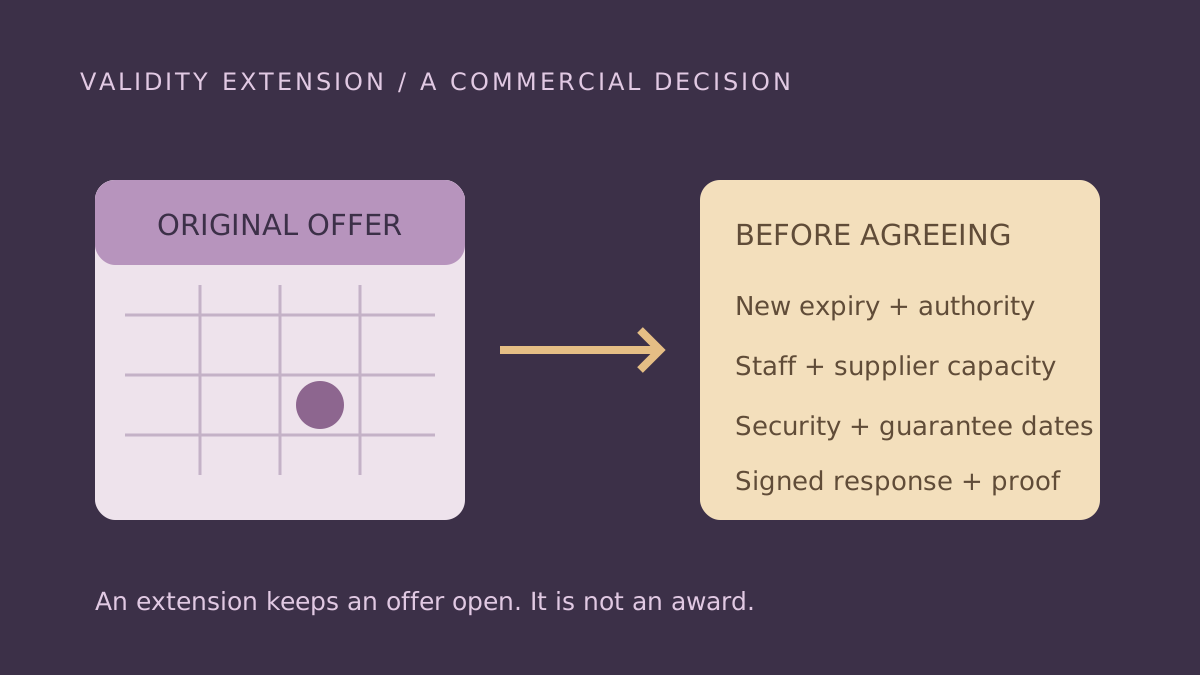
Project delays or scope changes may require an instrument extension or amount adjustment. Ask who must initiate it, how much notice the provider needs and what happens if the instrument expires before obligations end. Put internal reminders ahead of the required action date. Do not wait for a client reminder or assume a contract extension automatically binds the guarantee provider.
Keep a register of issued instruments and their originals or secure electronic equivalents. Limit authority to request amendments and verify beneficiary requests independently. Never represent that a guarantee has been extended while only an application is pending. Confirm whether release requires return of an original, a beneficiary letter or another specified step.
Ask about a call before assuming a defence
Have the provider and legal adviser explain the response process if a beneficiary demands payment, including notification, document checks and reimbursement exposure. Keep emergency contacts and instrument copies accessible to the authorised finance lead. Do not assume a dispute about the underlying work automatically prevents payment under the instrument. The wording and law matter, so discuss this scenario while arranging security rather than only after a demand arrives.
Make release an active close-out task
At completion, assemble the required certificates, defects records, final account and other release evidence. Ask the contract administrator to confirm which conditions remain outstanding. An expired calendar date may not be enough, and a completed job does not necessarily release all instruments automatically. Retain provider confirmation when exposure is actually discharged.
Before signing, summarise maximum potential cash outflow, collateral tied up, facility impact, retention delay and the business's ability to fund performance if a payment is late. Have a bank, broker and qualified contract adviser answer the questions within their expertise. This is educational risk identification, not advice to accept a particular instrument or a promise that all guarantee calls can be prevented.
- Distinguish guarantee, retention and insurance.
- Check amount base and exact wording.
- Confirm collateral, fees and reimbursement exposure.
- Track extensions and release evidence.
- Model cash withheld separately from liability.
Frequently asked questions
Is retention always a fixed percentage?
No. The amount, cap and release conditions come from the actual contract and any amendments.
Will insurance replace a performance guarantee?
Not automatically. The buyer's requirements and instrument wording govern. Obtain explicit clarification and provider advice.
Found this useful? Share it with another business — it costs you nothing and helps us reach more South African bidders.
Put your bid preparation into practice
Browse public tender previews, check the official requirements, then shortlist opportunities that fit your business. Starter is R149/month for search and saves. Professional at R299/month adds daily keyword email alerts, unlimited saves and closing-date reminders.
Compare tender subscription plans